
SSS Requirements Philippines 2026 (Complete, Easy & Updated Step-by-Step Guide)
Understanding the SSS Requirements Philippines 2026 is arguably the most critical step for anyone entering the workforce. Whether you are a fresh graduate landing your first corporate job, a self-employed freelancer securing your future, or an Overseas Filipino Worker (OFW) preparing for deployment, your Social Security System (SSS) number is your lifelong safety net. It guarantees your access to sickness benefits, maternity leaves, salary loans, and your eventual retirement pension.
In the past, securing your SS number meant dedicating an entire day to queuing outside a regional branch, filling out physical forms, and waiting weeks for processing. Today, the system has undergone massive digital transformation. The process is faster, but the stringent documentation remains.
As part of RequirementPH’s “Big 4” Pre-Employment masterclass series, we have created this ultimate guide. We will walk you through the exact SSS Requirements Philippines 2026 checklist, explain the difference between a temporary and permanent SS number, and provide a foolproof, step-by-step tutorial on how to register online without making critical errors.
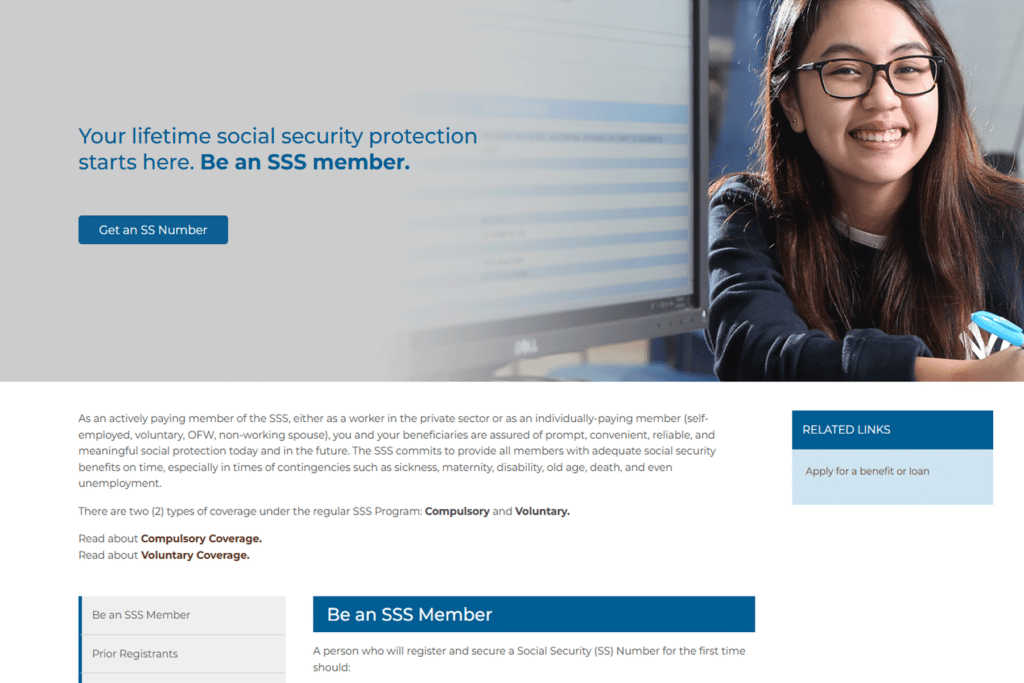
Who is Required to Register for SSS?
Under the Social Security Act of 2018 (Republic Act No. 11199), coverage is divided into mandatory and voluntary classifications. Identifying your category is essential before preparing your SSS Requirements Philippines 2026.
| Membership Category | Description & Coverage |
|---|---|
| Mandatory Members | Private sector employees, household workers (Kasambahays) earning at least ₱1,000 monthly, and sea-based/land-based OFWs. |
| Self-Employed | Freelancers, professionals (doctors, lawyers), business owners, and digital content creators earning at least ₱2,000 monthly. |
| Voluntary Members | Separated employees who wish to continue paying contributions, and non-working spouses of active SSS members. |
Core SSS Requirements Philippines 2026 (Documentary Checklist)
Before you access the online portal or visit a physical branch, you must secure the correct foundational documents. The SSS is incredibly strict with identity verification. A single spelling discrepancy between your birth certificate and your ID will result in application rejection.
1. Primary Valid ID (The Absolute Requirement)
To establish your permanent identity, you must submit a clear, scanned copy (or physical original if walking in) of any of the following primary IDs:
- PSA Birth Certificate (Strongly recommended for fresh graduates)
- Philippine Passport
- Driver’s License
- PhilSys National ID
- Seaman’s Book (SIRB)
2. Secondary IDs (If Primary is Unavailable)
If you do not possess any of the primary documents above, you must submit two (2) secondary IDs, provided that at least one of them contains your clear photo and date of birth. Examples include your Postal ID, Voter’s ID, Company ID, or TIN ID. For a complete breakdown, check out our guide on Valid Government IDs in the Philippines.
3. Additional Documents for Status Changes
If you are a married female wanting to use your husband’s surname, you must include a PSA Marriage Certificate in your SSS Requirements Philippines 2026 packet. If you are declaring children as your legal beneficiaries, you must provide their PSA Birth Certificates.
Step-by-Step Guide: SSS Online Registration Process
The government highly encourages applicants to use the online portal to generate their initial SS Number. Follow these precise steps to ensure your registration goes through seamlessly.
- Access the Official Portal: Open a secure browser and navigate to the official SSS website. Look for the “No SS Number Yet? Apply Online!” portal.
- Fill Out the Initial Form: Input your basic demographic data: First Name, Last Name, Middle Name, Date of Birth, and a highly secure email address. The system will send a confirmation link to this email.
- Click the Verification Link: Open your email inbox, find the SSS message, and click the link to proceed to the main Personal Record form.
- Complete the Detailed Profile: Fill out your permanent address, civil status, and list your beneficiaries (parents, spouse, or children). Accurate beneficiary declaration is a vital part of your SSS Requirements Philippines 2026 submission, as it dictates who receives your death benefits in the future.
- Generate the SS Number: Review all entered data carefully. Once submitted, the system will instantly generate your 10-digit SS Number. You will also receive an email containing a digital copy of your SSS Form E-1 and a transaction number.
Temporary vs. Permanent SS Number: The Crucial Difference
Thousands of new applicants make a devastating mistake at this stage. The SS Number generated online is initially classified as “Temporary.”
While a temporary number can be given to your HR department to start salary deductions, it restricts you from accessing the full suite of SSS benefits. You cannot apply for a salary loan, claim sickness benefits, or request a UMID card if your status remains temporary.
How to make it Permanent: To finalize your SSS Requirements Philippines 2026, you must upload your supporting documents (PSA Birth Certificate or Valid ID) through your My.SSS online portal, or physically present the original copies to an SSS branch near you. Once the SSS officer verifies that your uploaded documents match your online input, your status will instantly change to “Permanent.”
Troubleshooting: What to do if “Record Already Exists”
If you encounter a red error reading “Record Already Exists” while registering, do not try to bypass the system. This means your name and birthdate are already encoded in the SSS master database, likely from a previous summer job or an old application.
Under Philippine law, a citizen is only allowed one (1) SS Number for life. Possessing multiple SS numbers will split your contributions, resulting in denied loans and delayed pensions. To retrieve your old SS number, you must bring a valid ID and visit the nearest SSS branch or email their Member Relations department.
Next Step: The SSS UMID Card
Once your SS Number is permanent and you have posted at least one (1) month of contribution, you are officially eligible to apply for the Unified Multi-Purpose Identification (UMID) card. The UMID is considered one of the most powerful government IDs in the Philippines, combining your SSS, GSIS, PhilHealth, and Pag-IBIG data into one secure biometric card.
⚠ Important Notice and Disclaimer
RequirementPH is an independent, privately-funded educational platform dedicated to simplifying the SSS Requirements Philippines 2026 for all Filipinos. We are NOT affiliated, associated, authorized, endorsed by, or in any way officially connected with the Social Security System (SSS) or any government agency.
While our editorial team rigorously researches to maintain accurate and up-to-date guidance, official SSS internal protocols, portal interfaces, and specific document acceptance rules are subject to change based on official agency directives. Always process your applications exclusively through official `.gov.ph` portals or verified local branches. For official inquiries, secure account recovery, and final application submissions, please visit the official SSS website.
Complete Your Pre-Employment “Big 4” Checklist
Securing your permanent SS number marks a major milestone. However, it is just one component of the mandatory government records you must submit to your future HR department. Complete your documentation portfolio by referencing our other master guides: